


Crazy Eights
4.71.43K Reviews
App Specs
- Version
- 1.9.2.1196
- Updated On
- License
- Free
- Downloads
- 1,000,000+
- Developer
- MobilityWare
- Categories
- Card
- Platform
- Android, iOS
Screenshots
 Analysis by AppCompare
I enjoy card games that are easy to start but still leave room for a little judgment, and Crazy Eights fits that mood well. This is a mobile version of the classic wild-card game, developed by MobilityWare for quick sessions on Android. I found it most appealing when I wanted something familiar without committing to a long strategy game or learning a complicated rule set.
The important question is not whether Crazy Eights works as a card game; it does. The better question is whether this particular version suits the way you like to play. If you want a light, recognizable game for spare moments, it is an easy recommendation. If you are looking for deep deck construction, a large competitive ecosystem, or a highly demanding solo challenge, you may be happier elsewhere.
What I considered before recommending it
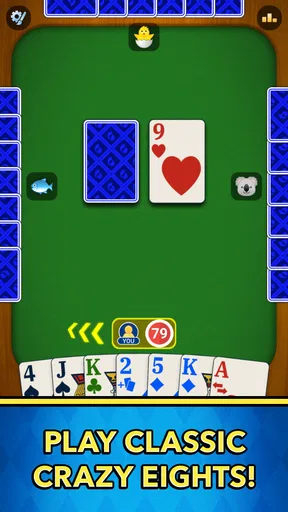
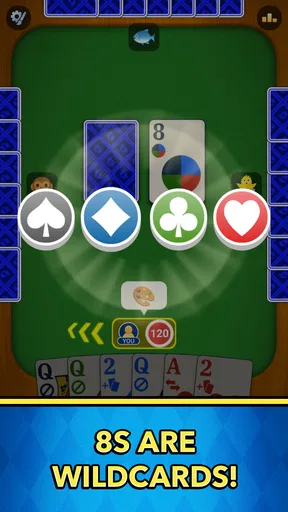
My first decision criterion was how quickly I could get into a match. Crazy Eights has a very low barrier to entry. The basic idea is familiar: play a card that matches the current suit or rank, use wild eights to change the direction of the round, and try to empty your hand before the other players. That makes it suitable for people who do not normally play digital card games.
The second criterion was session length. I treated it as a game for small gaps in the day rather than as a title that demands a dedicated evening. I could imagine opening it while waiting for an appointment, taking a short break, or relaxing before bed. That flexibility is one of its strongest qualities, especially for players who want a complete activity rather than an endless feed of content.
I also looked at how much thought the game asks from the player. It is not purely random, even though the deal can strongly affect a round. The useful decisions are modest but meaningful: whether to spend an eight now, which suit to choose, and when to protect a card that may become valuable later. The result is a pleasant middle ground between passive luck and serious card-game calculation.
Finally, I considered whether the free entry changes the experience. The game is free to download, rated for Everyone, and includes in-app purchases priced from around four dollars to around thirty dollars per item. That does not automatically make it a poor choice, but it means I would approach it as a casual free game rather than assume every part of the experience is available without spending.
The learning curve is friendly, but timing still matters
New players should understand the main turn cycle quickly. The challenge is not memorizing a long rulebook; it is noticing the small tactical choices hidden inside a simple round. I recommend resisting the urge to use every wild card immediately. Keeping one available can rescue a bad hand later, particularly when the active suit is one you cannot match.
Worth Reading Before You Choose

EA SPORTS FC Mobile 26 Is a Bigger Football Game, but It Takes Time

Flipboard Shows What News Apps Must Do Beyond the Feed

Switching to Android Auto Means Rethinking Your Driving Routine

Google Calendar Makes a Crowded Week Easier to Manage

Ludo King Makes the Most of the Minutes Between Plans

Baby Panda World Brings Quick Play to Modern Phones, but Its Game Library Feels Busy
Another useful habit is to watch what suit appears after a wild card. Even without tracking every card, remembering the recent suit choices can help you avoid making an obvious gift to the next player. This is the kind of light observation that gives the game more staying power than its simple appearance suggests.
I would not describe the strategy as deep enough for players who enjoy studying probabilities or building long-term plans across many matches. Still, it is enough to make a five-minute session feel interactive. You are making decisions, not merely tapping through an automatic sequence.
How the presentation affects everyday play
The straightforward design works in the game’s favor. A card game like this benefits from clarity more than visual spectacle, because the player needs to recognize the current suit and available plays instantly. I found the familiar format comfortable for playing one-handed and checking the screen briefly without having to decode a busy interface.
That simplicity also makes it a good choice for mixed-age households. Someone who has played the physical version can usually understand the digital version without much explanation, while a younger or less experienced player can learn through repeated rounds. The Everyone age rating reflects that broad accessibility.
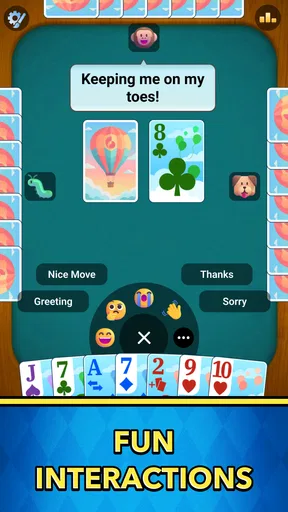
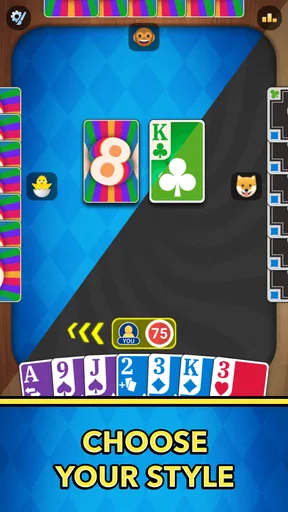
There is a trade-off, though. Players who expect a dramatic presentation, elaborate animations, or a large collection of unlockable card designs may find the experience restrained. Crazy Eights is strongest when the cards and turns are the focus. It is not trying to replace a visually ambitious role-playing game or a highly competitive collectible-card title.
Where Crazy Eights wins against familiar alternatives
Compared with a physical deck, this version removes the setup and cleanup that often stop a quick game from happening. I do not need another person nearby, a table, or someone willing to deal the cards. That makes it especially convenient for solo downtime. The cost of that convenience is that the social atmosphere of sitting around a table is not the same on a phone.
Compared with more complex digital card games, the advantage is immediate understanding. There are no elaborate decks to assemble or large rules systems to study before the first enjoyable match. I can recommend it to a friend who wants a card game but does not want to manage a collection, learn numerous card effects, or feel behind experienced players.
It also has an advantage over games built around very long sessions. A round of Crazy Eights can fit into a short break without requiring me to remember a complicated campaign state. If I am interrupted, the mental cost of returning is low. That makes it a practical choice for commuting or waiting-room play, provided I am comfortable playing on a phone during those moments.
The game has attracted a 4.7 average from around nineteen thousand ratings, with more than a thousand reviews visible in its store presence, and it has passed one million installs. Those figures suggest that the familiar format has broad appeal, but they should not be mistaken for proof that it will satisfy every type of card player. Popularity helps confirm that the concept works for many people; it does not turn a casual game into a strategic one.
A realistic use case: the short break that needs an ending
Imagine having ten minutes before a meeting or while waiting for a family member. A puzzle game may leave you halfway through a difficult section, while a competitive strategy game may require more concentration than you want to spend. Crazy Eights fits that gap because the rules are already familiar and the activity can be picked up without preparation.
In that situation, I would play conservatively at first, learn which suits are moving through the round, and avoid wasting a wild card just to make an ordinary turn easier. If the break ends unexpectedly, I would rather have played a simple round than started something that depends on a long chain of decisions. That is where this game feels genuinely useful rather than merely nostalgic.
When another kind of card game may suit you better
The clearest limitation is depth. If your favorite part of card gaming is constructing a specialized deck, discovering unusual combinations, or improving through a demanding ranked system, Crazy Eights will probably feel too light. A collectible or strategy-focused card game is a better fit for that purpose, even though it may take longer to learn and may place more pressure on progression.
It may also be the wrong choice if your main goal is social play with friends. A physical deck remains better for conversation, shared reactions, and the small rituals of playing around a table. A multiplayer-focused alternative may be preferable when you want direct interaction with people you know rather than a quick solo diversion.
Players who dislike luck-driven outcomes should think carefully before installing it. Good choices matter, but a poor deal can still shape the round. I see that randomness as part of the relaxed appeal, not as a flaw that can be removed. However, if you want every result to reflect precise planning, a more skill-dominant card game would be less frustrating.
There is also the question of monetization. The free price makes trying it easy, but the presence of optional purchases means I would not hand the phone to a child without first considering how purchases are handled on the device. The age rating is broad and welcoming, yet adults should still make their own decision about spending controls rather than assuming that free installation means a completely purchase-free experience.
What switching from physical cards really costs
Moving from a physical deck to the app saves time, but it changes the character of the game. The app handles dealing and turn flow, which is helpful when I am alone or in a hurry. In return, I lose the ability to invent house rules easily, deal extra hands across a table, or turn a round into a social occasion.
Switching from another digital card game has a different cost. Crazy Eights is easier to understand, but it may offer less long-term variety for someone who enjoys mastering a large system. Before changing, I would ask myself whether I want convenience and familiarity or a deeper sense of progression. The right answer depends more on my available time than on which game is objectively better.
The current version is 1.9.2.1196 and it supports Android 8.0 or later. For most people with a reasonably current Android device, compatibility should be straightforward, but anyone using an older phone should check the operating-system requirement before planning around it. I appreciate that the entry point is not aimed only at the newest hardware.
Small habits that make rounds more enjoyable
I found three habits particularly useful. First, I treat eights as flexible resources rather than emergency buttons. Using one early can be correct when it prevents a dangerous suit from staying active, but holding one can be more valuable when my hand is nearly empty.
Second, I pay attention to the cards I am forced to draw. If a certain suit repeatedly leaves me without a move, I avoid choosing it with a wild card unless I have a strong reason. This does not guarantee a win, but it turns the round into a series of informed choices instead of random tapping.
Third, I separate a close loss from a bad decision. Because the game contains luck, not every defeat means I played poorly. Reviewing whether I spent a wild card too soon is more useful than simply blaming the deal. That mindset keeps the game relaxing and helps prevent a casual match from becoming unnecessarily irritating.
These details are easy to miss because the rules are so familiar. They are also why I think the game works best when played in short bursts with modest expectations. It rewards attention, but it does not demand the kind of concentration that belongs to a serious tournament title.
Who should install it now
I would recommend Crazy Eights to someone who wants a recognizable card game on Android, prefers short sessions, and values a gentle learning curve. It is especially suitable for former physical-card players who want to play alone, casual users who do not want a complex rules system, and families looking for an accessible game that is easy to explain.
I would be more cautious about recommending it to players who need rich progression, advanced strategy, or a strong social layer. They may enjoy a few rounds, but the simplicity that makes the app approachable can also make it feel limited over time. For those users, a deeper card game or a real-world deck may provide more lasting satisfaction.
MobilityWare has positioned this release as a compact version of a classic rather than an ambitious reinvention, and that is the right way to judge it. I do not open it expecting a huge competitive journey. I open it when I want a familiar ruleset, a little decision-making, and an activity that does not take over my evening.
My recommendation
My final view is positive, with a clear condition: install it if you want convenience and classic card play more than complexity. The free entry, Everyone rating, and familiar structure make it easy to try, while the wild-card decisions give each round enough personality to avoid feeling completely automatic.
I would start without spending money, play several short sessions, and decide whether the available experience matches my habits before considering any in-app purchase. That is the sensible approach for a casual game with optional items ranging from around four dollars to around thirty dollars each. If I wanted a richer strategic hobby, I would choose another category; if I wanted a quick digital hand of Crazy Eights, this is a practical and enjoyable choice.
In short, Crazy Eights is best understood as a dependable pocket card game, not a replacement for every other card experience. It wins through accessibility, quick setup, and the small tactical decisions around wild cards. For spare moments and relaxed play, I would recommend it to a friend. For deep competition or a lively table atmosphere, I would point that friend toward a different option.
Pros
- Simple rules make it easy for new players to start quickly.
- Fast rounds are ideal for short gaming sessions.
- Playable offline without requiring a constant internet connection.
- Multiple rule options add variety to repeated matches.
- Lightweight design runs smoothly on most Android and iOS devices.
Cons
- Gameplay can become repetitive after extended sessions.
- Luck often has a stronger impact than strategic decisions.
- Some versions include frequent ads between rounds.
- Limited customization may reduce long-term appeal for some players.
- Online features may depend on an active player community.
FAQs for Crazy Eights
What is Crazy Eights, and how is the game played?
Crazy Eights is a fast-paced card game for one or more players in which the goal is to get rid of all the cards in your hand before your opponents do. On each turn, you usually match the top discard by suit or number. Eights are special cards that allow you to change the active suit, making the game unpredictable and easy to learn.
Can I play Crazy Eights offline or without creating an account?
In the version I reviewed, Crazy Eights is designed for quick and accessible play, so users can generally start a local or single-player match without completing a lengthy registration process. Offline availability may depend on the specific app version and mode. An internet connection can still be required for online multiplayer, advertisements, updates, or synchronized features.
Does Crazy Eights support multiplayer games?
Crazy Eights commonly includes options for playing against computer-controlled opponents and, depending on the edition, against other people through local or online multiplayer. Before downloading, check the store description for the exact modes offered by that version. Online matches may require a stable connection, and some features could be limited by region, device compatibility, or the developer’s current server support.
Is Crazy Eights suitable for children and beginners?
Yes, Crazy Eights is generally suitable for beginners because its core rules are simple and can be understood after only a few turns. The app is also a good choice for families, although parents should review the store’s age rating and any online-chat or advertising features. Some versions may include purchases or multiplayer interactions that require additional supervision for younger players.
Are there advertisements or in-app purchases in Crazy Eights?
The monetization system depends on the particular Crazy Eights app you install. Many free versions display advertisements between rounds or offer optional purchases to remove ads, unlock card designs, or access extra game modes. I recommend checking the Google Play or App Store listing before downloading, especially if you prefer an uninterrupted experience or want to avoid accidental purchases.


